IPTV vs Traditional TV
A balanced comparison of IPTV against cable and satellite — cost structure, flexibility, hardware, and the trade-offs of each.
Infrastructure and installation
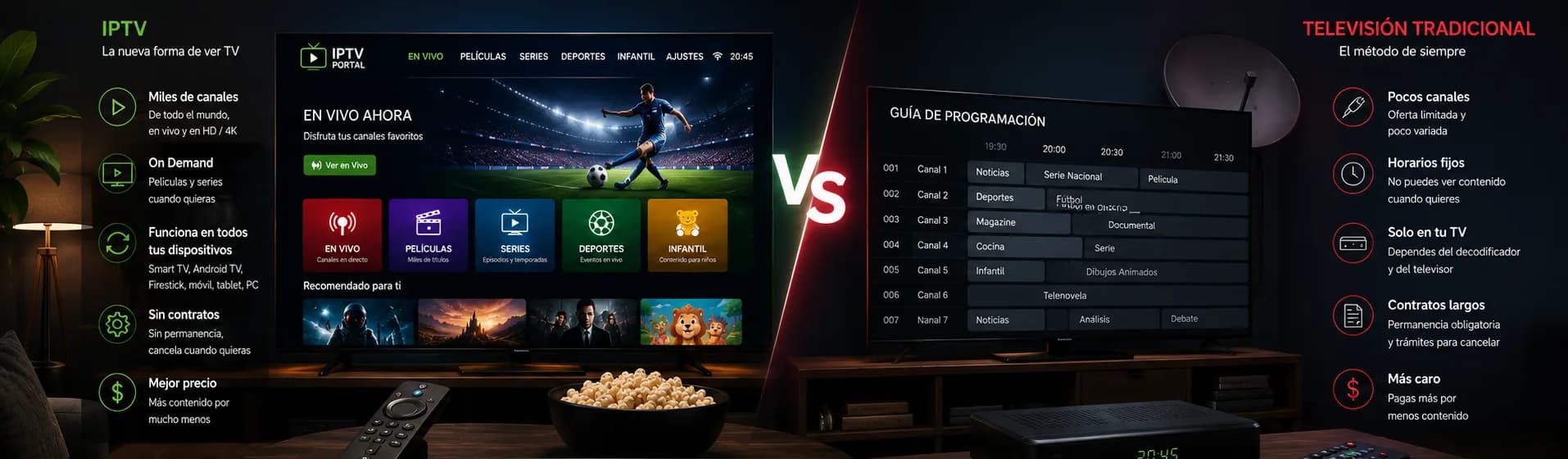
Cable requires a physical line run to your home and satellite requires a dish with a clear line of sight to the sky — both typically involve a technician visit. IPTV uses the internet connection you likely already have, so setup is software-only: install an app, enter your details, and you're watching.
Hardware requirements
Traditional TV usually ties you to a provider-supplied receiver box. IPTV runs on general-purpose devices you may already own — a Smart TV, phone, tablet, or an inexpensive streaming stick — rather than proprietary hardware locked to one company.
Flexibility and portability
Because IPTV is app-based, the same account typically works across multiple types of devices (though usually one active stream at a time per subscription, depending on your plan). Traditional TV service is generally tied to the physical location the line or dish was installed at.
Honest trade-offs
IPTV's biggest dependency is your internet connection — a poor or unstable connection will affect IPTV in a way it wouldn't affect a dedicated satellite feed. If your internet is reliable, IPTV tends to offer more flexibility and simpler setup; if your internet connection is weak or unreliable, that's worth factoring in honestly before switching.